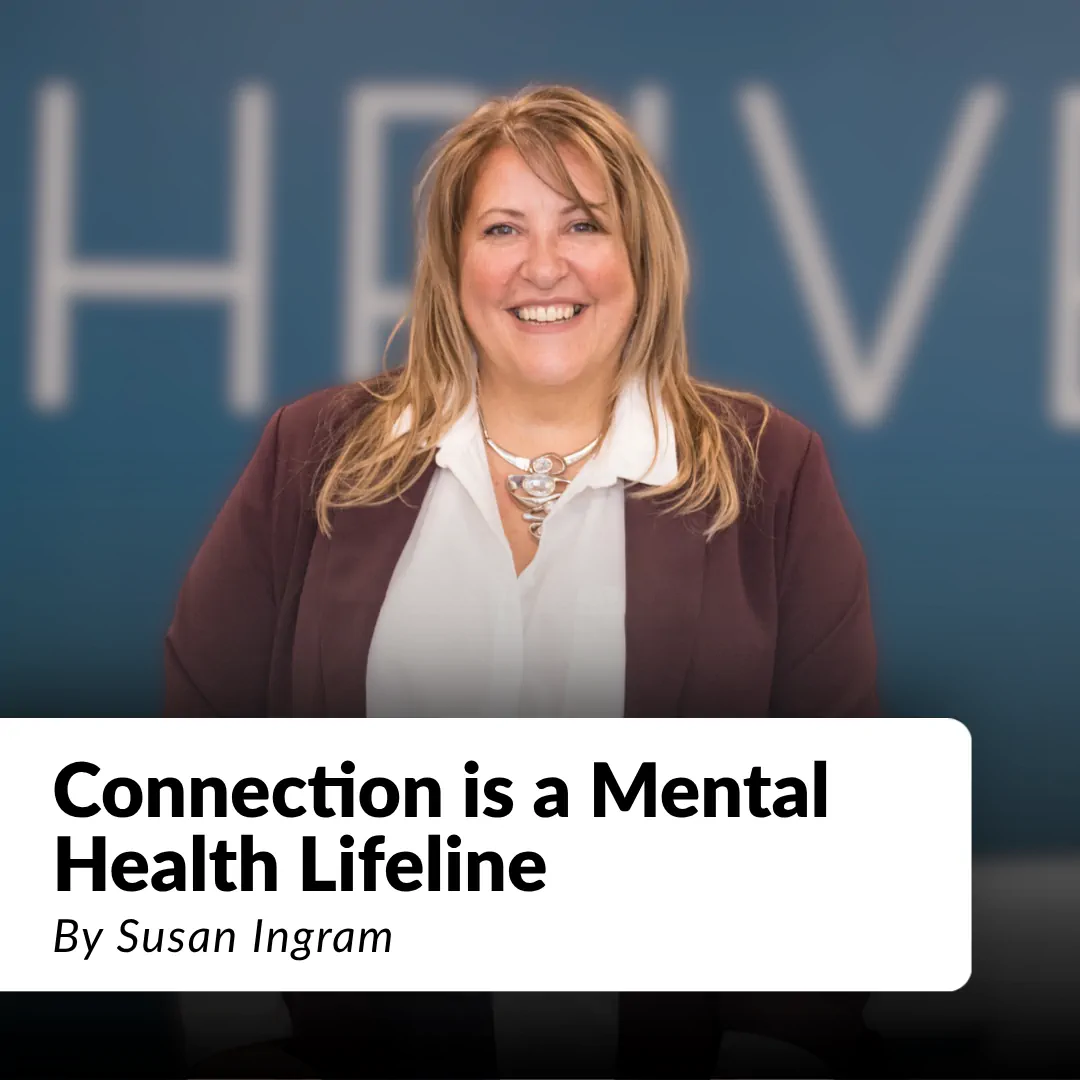

By Susan Ingram
Executive Director, Big Brothers Big Sisters of Ottawa
Before most of us knew the word mentorship, we experienced it.
For many people, there was someone who helped shape the direction of their life long before they fully understood the impact that relationship would have. Maybe it was a teacher who saw potential in you before you saw it in yourself, a coach who kept showing up, a neighbour, an aunt, or a trusted family friend who listened during difficult moments and reminded you that you mattered.
Take a moment and think about that person. Who would you be today without the adults who encouraged you, challenged you, supported you, or simply stayed present during important moments in your life?
For many young people, that kind of connection is missing.
At Big Brothers Big Sisters of Ottawa (BBBSO), we see every day how deeply young people are craving connection, belonging, and trusted relationships. At a time when youth mental health concerns continue to rise, mentorship may be one of the most overlooked and powerful protective factors we have.
We are not only facing a youth mental health crisis, we are also facing a broader crisis of connection. Despite living in a world where we are constantly connected online, many young people and adults alike feel increasingly isolated from one another and disconnected from their communities.
Research from Statistics Canada shows that a strong sense of belonging is directly connected to positive mental health outcomes among youth. Young people who feel connected to their communities, schools, and relationships are significantly more likely to report positive mental health and overall well-being.
At the same time, many young people are struggling quietly.
In 2025, BBBSO supported 986 children and youth across Ottawa, Renfrew County, and Prescott Russell. Of the young people we serve, 67% identified challenges with social isolation, 57% were coping with mental illness, and nearly half reported experiencing bullying.
These are not abstract numbers. They represent young people sitting in classrooms feeling invisible, questioning whether they belong, or navigating anxiety, grief, bullying, identity struggles, or family instability without a trusted adult to turn to.
This is where mentorship matters.
Research from Mentor Canada found that young people who had mentors growing up reported stronger mental health, greater confidence, increased feelings of belonging, and better educational and employment outcomes as adults. Their research also found that many young people who wanted a mentor never had one.
Earlier this year at the Big Brothers Big Sisters of Canada national convention, Dr. Jean Clinton spoke passionately about connection, belonging, and the profound impact relationships have on mental health and human development. Dr. Clinton, one of Canada’s leading child psychiatrists and child advocates, has long emphasized that relationships are the foundation of healthy development.
Her connection to mentorship is also deeply personal. Her husband was a Big Brother, and his Little Brother became part of their extended family over the years. That story stayed with me because it reflects something we see every day at BBBSO. Mentorship is not simply about volunteering hours or offering advice. It is about building relationships rooted in trust, consistency, care, and belonging. In many cases, those relationships last a lifetime.
Research from organizations like Search Institute continues to reinforce this reality. Developmental relationships help young people build resilience, emotional well-being, confidence, and hope. Young people do not thrive because they never experience adversity. They thrive because they have supportive relationships that help them navigate it.
At Big Brothers Big Sisters of Ottawa, mentoring is not simply an activity added onto a program. It is the core of what we do. For 56 years, BBBSO has specialized in building and supporting intentional, long term mentoring relationships grounded in trust, consistency, and developmental connection.
Our mentors are volunteers who choose to invest their time, care, and presence in the life of a young person, often over many years. Those relationships are carefully matched, professionally supported, and rooted in evidence based mentoring practices designed to strengthen belonging, resilience, confidence, and well being.
While many youth organizations provide valuable recreational and after school opportunities, mentoring offers something distinct. It creates sustained relationships with trusted adults who continue showing up consistently in a young person’s life, helping them feel seen, supported, and connected both within and beyond structured programs.
At BBBSO, we see that evidence come to life every single day.
This year, young people in our mentoring programs reported feeling more supported, more cared for, more confident, and more hopeful about their future because of the mentors in their lives. We also saw a 7% increase in positive developmental relationship outcomes among mentees in 2025.
What makes mentorship particularly powerful is that the impact extends far beyond the young person. Parents and caregivers often tell us they feel relief knowing another caring adult is walking alongside their child, and families frequently describe feeling less alone while navigating challenges.
Mentors themselves are also transformed by the experience. One mentor recently shared, “I signed up to help, but I did not expect how much this would change me. I spend less time online and more time building real human connections.”
That reflection speaks to something much larger happening in our society. People are hungry for connection. Young people need spaces where they feel safe being themselves and trusted adults who listen without judgment, show up consistently, and remind them that they matter. Adults, too, are searching for purpose, belonging, and meaningful ways to contribute to their communities.
Belonging is a word we use often, but for young people, it can mean something very simple. It is the feeling of being accepted for who you are. It is knowing someone notices when you are missing, asks how you are doing, and genuinely cares about the answer.
For young people navigating anxiety, bullying, family instability, identity questions, or loneliness, that sense of connection can change the way they see themselves and their future.
Mentorship creates both.
Over the past 14 years with BBBSO, I have had the privilege of watching these relationships unfold in real time. I have seen quiet young people become more confident, mentors become trusted adults and lifelong supporters, and conversations grow into friendships that often feel more like family. I have also watched former mentees return years later as volunteers, mentors, staff members, and community leaders themselves.
That is the long-term power of mentorship.
When we ask adults to think about who shaped their lives, most people can immediately picture someone. A teacher, a coach, a neighbour, or a mentor who believed in them before they fully believed in themselves. Now imagine what happens when a young person never experiences that kind of connection.
That is why mentorship matters.
Not because young people need perfection, but because every young person deserves to know they matter to someone.
At BBBSO, we often say mentorship is not about being perfect. It is about presence. It is about showing up consistently enough that a young person begins to believe, “I matter. Someone cares about me. I can do hard things.”
Those beliefs change lives.
If we are serious about supporting youth mental health, building resilience, and creating healthier communities, we need to start recognizing mentorship not simply as a volunteer opportunity, but as essential community infrastructure. We also know the impact of mentorship extends far beyond mental health, influencing educational success, confidence, career readiness, and long-term community connection.
Connection is not a luxury. It is foundational to mental health, belonging, and hope. Sometimes, one caring relationship can change the entire direction of a young person’s life.
References
Statistics Canada. Sense of belonging and youth mental health in Canada
https://www150.statcan.gc.ca
Mentor Canada. Mapping the Mentoring Gap and youth mentoring outcomes research
https://mentorcanada.ca
Search Institute. Developmental Relationships Framework
https://searchinstitute.org/developmental-relationships
Dr. Jean Clinton. Child development, belonging, and relationships research
https://jeanclinton.ca
Big Brothers Big Sisters of America mentoring outcome research
https://www.bbbs.org